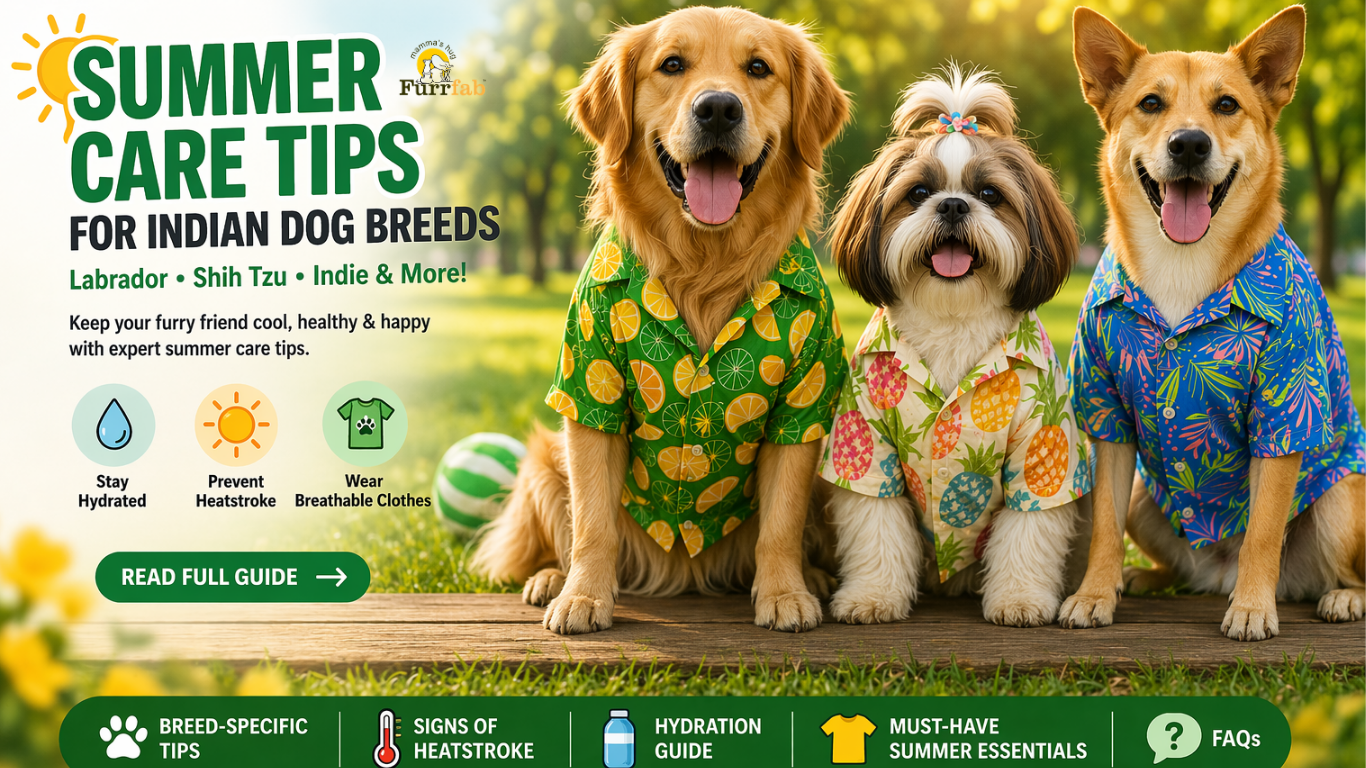
Summer in India can be extremely harsh not just for humans but for our furry companions too. As temperatures rise, dogs become more vulnerable to dehydration, heatstroke, and skin issues. Therefore, it’s essential to take proactive steps to keep your pet cool, comfortable, and safe.
In this guide, you’ll discover practical summer care tips for popular Indian dog breeds like Labrador, Shih Tzu, and Indie dogs, along with actionable advice that every pet parent can follow.
Why Summer Care is Important for Dogs
Dogs cannot sweat like humans. Instead, they rely on panting to regulate their body temperature. However, during peak summer, this natural cooling system becomes less effective. As a result, your dog may quickly overheat.
Moreover, certain breeds are more sensitive to heat, especially those with thick coats or short noses.
Summer Care Tips for Different Dog Breeds
Labrador Retriever (High Risk in Summer)
Labradors have thick double coats, which makes them more prone to overheating.
What you should do:
- Keep them indoors during peak heat hours (12 PM – 4 PM)
- Provide constant access to fresh, cool water
- Use lightweight cotton clothing for protection from direct sunlight
- Avoid excessive exercise during daytime
Additionally, regular brushing helps remove excess fur and improves airflow.
Shih Tzu (Sensitive to Heat)
Shih Tzus are brachycephalic (short-nosed), so they struggle to breathe in hot weather.
Care tips:
- Keep them in well-ventilated or air-conditioned rooms
- Trim their coat moderately (avoid shaving completely)
- Clean their face and eyes regularly to prevent infections
- Use cooling mats or summer shirts
Because of their structure, even mild heat can stress them quickly.
Indie Dogs (More Adaptable but Still Need Care)
Indian Pariah (Indie) dogs are naturally adapted to Indian climates. However, they still need care during extreme heat.
What you should do:
- Ensure shaded resting areas if they stay outdoors
- Provide electrolyte water occasionally
- Avoid hot surfaces like roads during walks
- Check paws for burns or cracks
Even though they are resilient, extreme heat can still affect them.
Pugs & Bulldogs (Extreme Heat Risk)
Flat-faced breeds face serious breathing difficulties in summer.
Important tips:
- Never leave them outdoors in heat
- Avoid walks during the day
- Keep them hydrated at all times
- Watch for excessive panting
In fact, these breeds are at the highest risk of heatstroke.
Signs of Heatstroke in Dogs
Recognizing symptoms early can save your dog’s life.
Watch out for:
- Excessive panting
- Drooling
- Vomiting
- Weakness or collapse
If you notice these signs, immediately move your dog to a cool place and consult a vet.
Must-Have Summer Essentials for Dogs
To make summer easier for your pet, consider these essentials:
- Breathable cotton summer shirts
- Cooling mats or beds
- Portable water bottles
- Paw protection for hot surfaces
These products not only improve comfort but also prevent serious health issues.
Conclusion
Taking care of your dog during summer doesn’t have to be complicated. By understanding your dog’s breed-specific needs and making small adjustments, you can ensure they stay happy and healthy.
Most importantly, always prioritize hydration, avoid heat exposure, and use appropriate summer products to protect your furry friend.
FAQs (Frequently Asked Questions)
1. How often should I give water to my dog in summer?
You should ensure constant access to fresh water. Additionally, encourage your dog to drink every 1–2 hours, especially after activity.
2. Can dogs wear clothes in summer?
Yes, but only lightweight and breathable fabrics like cotton. These clothes protect from direct sunlight without trapping heat.
3. What time is best to walk dogs in summer?
Early morning (before 9 AM) and late evening (after 6 PM) are ideal. Avoid walking during peak heat hours.
4. Should I shave my dog’s fur in summer?
Not always. While trimming helps, shaving completely can expose skin to sunburn and reduce natural protection.
5. How can I tell if my dog is overheating?
Look for signs like heavy panting, drooling, lethargy, and vomiting. If these appear, act quickly and cool your dog down.
Get Direction